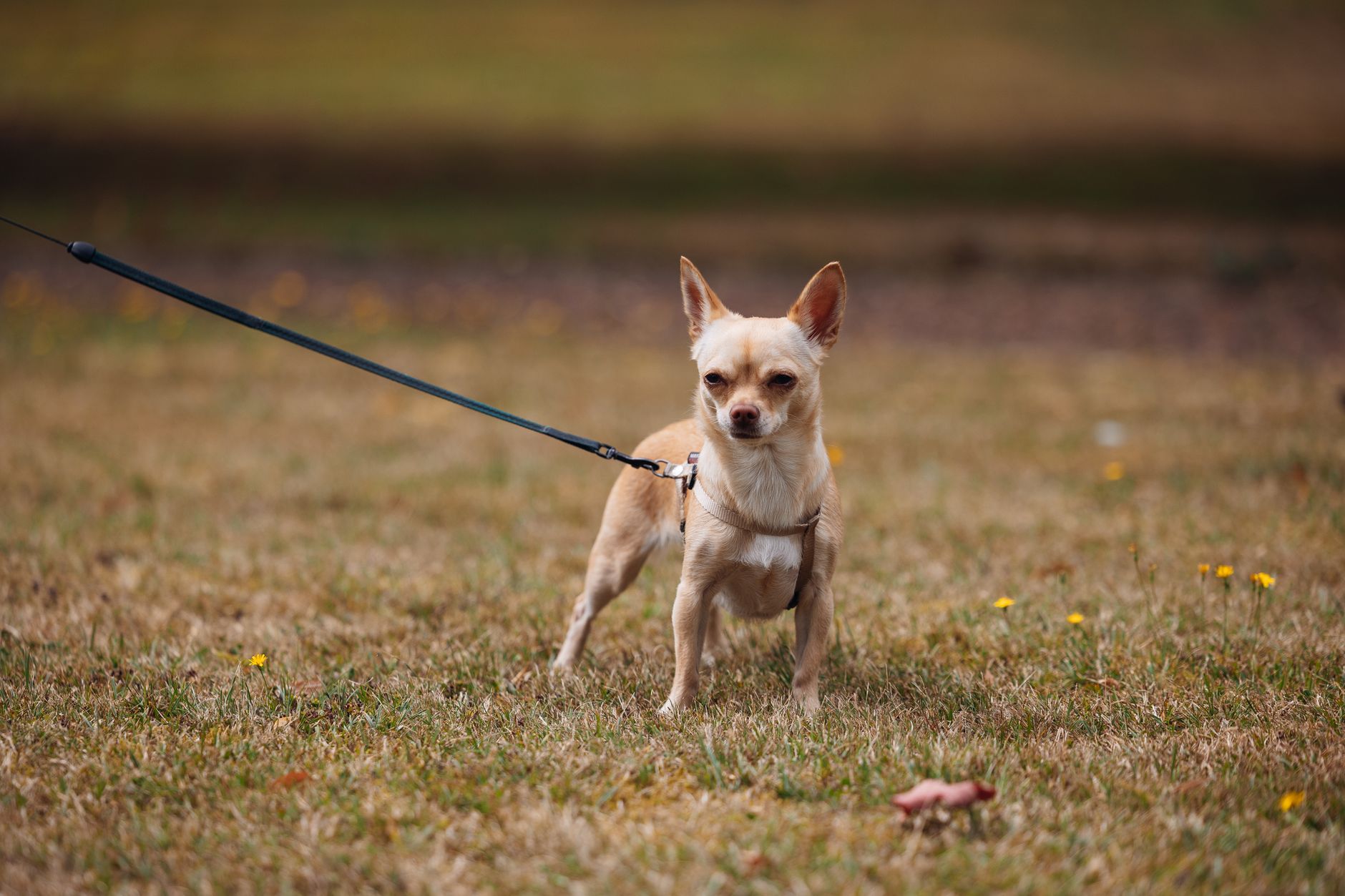
A loose leash makes neighborhood walks more comfortable for both you and your dog. The goal is not a perfectly positioned dog, but a leash that stays slack while your dog checks in and moves with you. Start in a quiet place, reward the behavior you want, and add distractions gradually. With consistent, brief practice, your dog can learn to walk more calmly on San Diego sidewalks, paths, and other outings.
Start in a Quiet Place
Choose a familiar, low-distraction spot, such as your living room, driveway, or a quiet stretch of sidewalk. Use a comfortable, well-fitted harness or flat collar and a standard leash. Before moving, let your dog notice the leash and reward them for standing near you with slack between you and the collar or harness.
Take a few steps. When your dog walks beside you or looks back toward you and the leash remains loose, mark the moment with a word such as “yes” and give a treat. If the leash tightens, stop calmly. Wait for your dog to turn or step back toward you, then reward the slack and continue.
Choose Rewards That Work
Use small, soft treats your dog can eat quickly, especially when you are practicing outdoors. Save especially appealing treats for harder settings, such as passing another dog at a distance. Praise, a brief sniff break, or moving forward can also reward your dog; the best choice depends on what they enjoy and what is safe in that moment.
Reward often at first, before your dog has a chance to pull. Give the treat near your leg so your dog does not have to cross in front of you to get it. As your dog succeeds, vary the timing: reward after a few loose-leash steps, then after a slightly longer stretch. Keep sessions brief enough that your dog can stay engaged.
Add Distractions Gradually
Practice first where your dog can notice distractions without being overwhelmed. In San Diego, that might mean beginning on a quieter residential block before trying a busier sidewalk or a path with more people, bikes, and dogs. Keep enough distance for your dog to respond to their name and take a treat. If they cannot, create more space and try again.
When your dog spots something interesting, say their name once or use a familiar cue, then reward them for turning toward you. You can also pause and let them watch from a comfortable distance while the leash stays loose. Avoid dragging them closer or forcing a greeting. Cross the street, turn around, or step aside when that gives both of you room.
Keep Walks Manageable
Set your dog up to succeed by choosing a route and time that match their current skills. If the leash tightens repeatedly, the environment may be too challenging; return to a quieter area or shorten the practice. Avoid leash jerks and scolding, which can make walks more stressful without showing your dog what to do instead.
Practice a little during ordinary outings, but separate training from necessary travel when you can. For a quick potty break, focus on safety and give your dog room to move. For training, bring treats, watch for early signs of distraction, and end while your dog is still responding. Consistency across family members helps your dog understand what earns rewards.
Loose-leash walking develops through repetition, clear rewards, and manageable challenges—not one long training session. Begin somewhere quiet, reward slack as it happens, and increase distractions only when your dog is ready. If pulling or reactivity makes walks difficult, Coastline Canine can help you build a practical training plan for your dog.