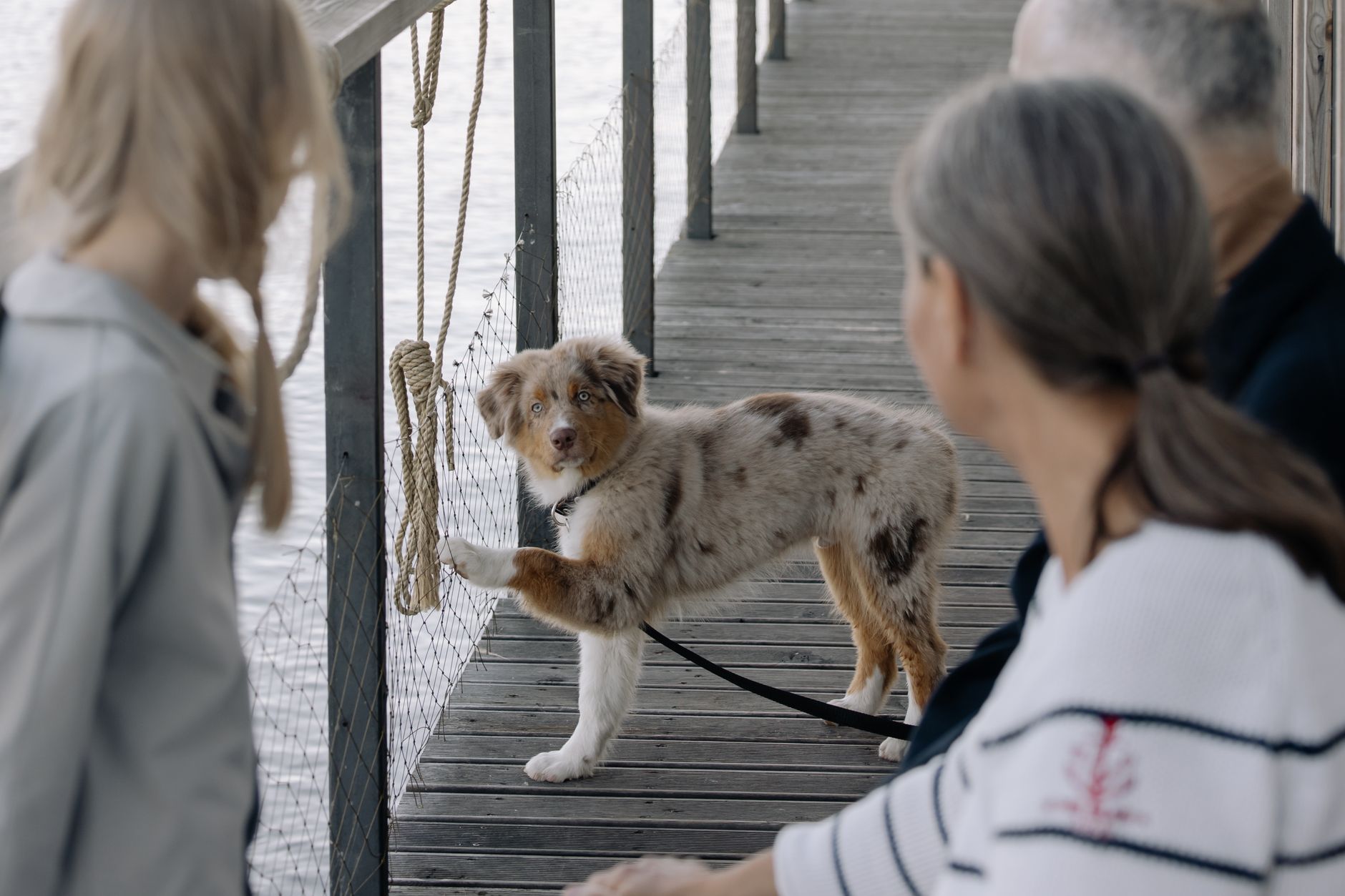
A dog that jumps on guests may be excited, seeking attention, or unsure how to handle the arrival. The behavior can feel overwhelming, but it often becomes stronger when jumping earns petting, talking, or eye contact. A calmer greeting takes preparation and repetition. Set up the space before visitors arrive, give your dog a clear alternative, and help guests respond consistently. These steps make arrivals safer and give your dog a predictable way to participate.
Why Dogs Jump at the Door
Arrivals bring movement, voices, and attention—things many dogs find exciting. Jumping can be a way to reach a person’s hands or face, or simply a response to energy building at the doorway. If guests talk to, touch, or look at the dog while it jumps, even a gentle reaction may reward the behavior.
Some dogs jump because they are worried or overexcited, not because they are trying to be dominant. Watch your dog’s body language. A loose body and wagging tail can signal excitement, while stiffness, tucked posture, or repeated retreat may indicate discomfort. Adjust your greeting plan to your dog’s emotional state.
Prepare Before Guests Arrive
Give your dog a chance to sniff, move, and take a bathroom break before the doorbell rings. Put treats near the entry and decide where your dog will wait, such as behind a baby gate, on a mat, or beside you on leash. A barrier or leash helps prevent rehearsals of jumping while you teach a different routine.
Ask visitors to text when they arrive instead of ringing the bell if that sound sends your dog into a frenzy. For the first few minutes, keep the greeting low-key. Tell guests to enter calmly, avoid leaning over your dog, and wait to interact until your dog has four paws on the floor or is settled in the chosen spot.
Teach a Calmer Greeting
Practice when no guests are present. Send your dog to a mat or a marked spot, reward them for staying there, and gradually add movement toward the door. Keep sessions short and use small treats. If your dog leaves the spot, guide them back without scolding, then reward the next calm moment.
Next, rehearse with a familiar helper. Start far enough from the entrance that your dog can respond to you. Reward a sit, a stay on the mat, or four paws on the floor. Let the helper approach or offer attention only while your dog remains calm; if jumping starts, have the helper step back and try again after your dog settles.
Help Guests Follow the Plan
Give visitors one simple instruction before they come in: ignore jumping by turning slightly away, keeping hands close, and pausing attention. As soon as your dog is calm, they can greet with a quiet voice or offer a treat low to the ground. This makes calm behavior more rewarding than reaching up.
If your dog cannot settle, increase distance or use a gate, leash, or comfortable room with a food toy. Do not force contact or punish the dog for reacting. End the greeting before excitement escalates, and try again later at an easier level. Consistency across visits matters more than expecting perfect behavior right away.
A calmer welcome starts before the door opens: reduce excitement, manage access, and reward the greeting you want to see. Keep practice brief and make sure every guest follows the same plan. If your dog’s reactions feel unsafe or do not improve with practice, Coastline Canine can help you build a training approach for your home.